

I have four different types of browser tabs. There are my Daily Tabs for sites I use every day, like Google Drive for shared docs and YouTube Music for my once-per-day listen of the Blippo+ soundtrack. There are Todo Tabs for sites I haven’t gotten around to yet, like a class action lawsuit against CVS that requires proof in order to get my $10. (Just give me the money! CVS sucks!!!) There are Resource Tabs, aka Future Bookmarks, which are super useful seeming sites I’ll probably never look at again but must be hoarded.
Then there are the most dreaded tabs of all… Decision Tabs.
Decision Tabs are tabs I’ve kept open until I decide to act on them. Usually it’s about something I need to buy. For example, a friend recommended a TTRPG to me. It looks fun! Right up my alley theme-wise. But the PDF costs… $10! Uh oh, a decision! Should I buy it? Will I ever play it? Do I need yet another unplayed TTRPG manual on my hard drive? And so the tab sits every day, costing me system memory, endlessly waiting for me to decide to buy game or close tab. Buy game or close tab. Buy game or close tab! It’s the nerdiest Edgar Allan Poe story imaginable.
One of my most infamous Decision Tabs was for an online class called Choice Design in Solo Adventure Gamebooks. Yes, I was very indecisive about a choice design class! Irony gushed out of my Mac’s USB ports! The class sounded interesting. I’ve designed choices in video games professionally, but this class was specifically about classic Choose Your Own Adventure / Fighting Fantasy style gamebooks. I have a whole shelf of those and used to write in that style for Adventure Snack. I was curious if there were any specific tips or strategies in choice design for gamebooks vs. video games. One of my bucket list projects is writing a proper adventure gamebook, so I was definitely interested in the topic.
However, it was a $50 online course that was entirely self-directed. No teacher leading weekly sessions. (There’s a Discord, but I am drowning in Discords.) I wasn’t familiar with the instructor’s work. The course was hosted on Storytelling Collective, an online RPG writing academy which I’ve had mixed success with. Years ago, when I wrote my first D&D campaign Target Run, I took a course on writing adventure modules. The course had solid insight on broad storytelling fundamentals for adventures (pacing, descriptive language, etc), but I desperately needed help on the mechanical side. D&D can get complicated. If I want the adventure to be beginner friendly, what type of goblins should be looting the banquet hall and how many? The other class I took was on marketing for TTRPG creators that was more of a surface level marketing primer and not very specific about the TTRPG market. I worked as a copywriter for years, so I understood the idea of target audience. I was hoping to get insight on writing a hooky product description for DriveThruRPG. What are the best keywords?!?
So I worried the class on Choice Design wouldn’t get down and dirty with the deets. The tab for the course would stay open for weeks, then I would close it as part of a grand tab purge. Then I would remember the course, find it, and re-open the tab… only to close it again two months later. I had an on-again off-again relationship to this tab. Until finally, earlier this year, Storytelling Collective ran a big sale and the course was $35. It had been a minute since I took a creative writing class, so I finally turned to page 78 and bought the course.
I won’t make you go down an entire branch of this dialogue tree to know my thoughts on the class. It was very insightful! The instructor, Sersa Victory, has a smart approach, looking at choice design from the perspective of game design and mechanics. How can we design choices that feel fun? What choice types feel unfair or unnecessary? One thing I liked about Sersa’s approach was his choice taxonomy. He did a great job cataloging the types of choices specific to gamebooks and when to use (or entirely avoid) them. The exercises had me writing different types of choices. In one particularly thoughtful exercise, I wrote bad choices on purpose, then wrote editorial notes for myself on how to make those choices better.
My favorite exercise in the class actually had nothing to do with gamebooks. Well, not specifically. It was a technique framed as generating ideas for gamebooks. The prompt was to write a stream of consciousness list of objects (ex. hockey stick), events (ex. the Stanley Cup finals), categories (ex. heated/sexy), concepts (ex. rivalries) and places (ex. KeyBank Center arena in Buffalo, NY) that I thought would be fun to make a gamebook about. (I’m pretty sure the exercise would also work for hockey romance novels.) The instruction is then to pair the lists together to make interesting gamebook concepts. Some of my favorite concepts I came up with were Criminal Trees, Mutant Fairies, and Gambling Orbs, which I imagined as Kalshi for wizards. I had a blast with this simple idea generating technique. No water-guzzling LLM subscription required!
The class took me a couple sessions to complete. All-in-all, I’d say the course is worth it for anyone who’s interested in designing for this hyper-specific niche in fiction. I came away with solid, applicable knowledge.
Will learning how to design choices better help me make more decisive decisions with my browser tabs? Let me put it this way. In my opinion, I’m a much better game designer than I am a player. The tab for that $10 TTRPG? Still open!
🎲 Your Turn: Do you have a bunch of browser tabs open? Which one has been open the longest? (Guesstimates are fine.) What was the last gamebook you read? Any you’d recommend? Did you try the idea generating exercise? What’d you come up with? I’d love to hear from you! Reply directly to this email or comment by hitting the orange button below.
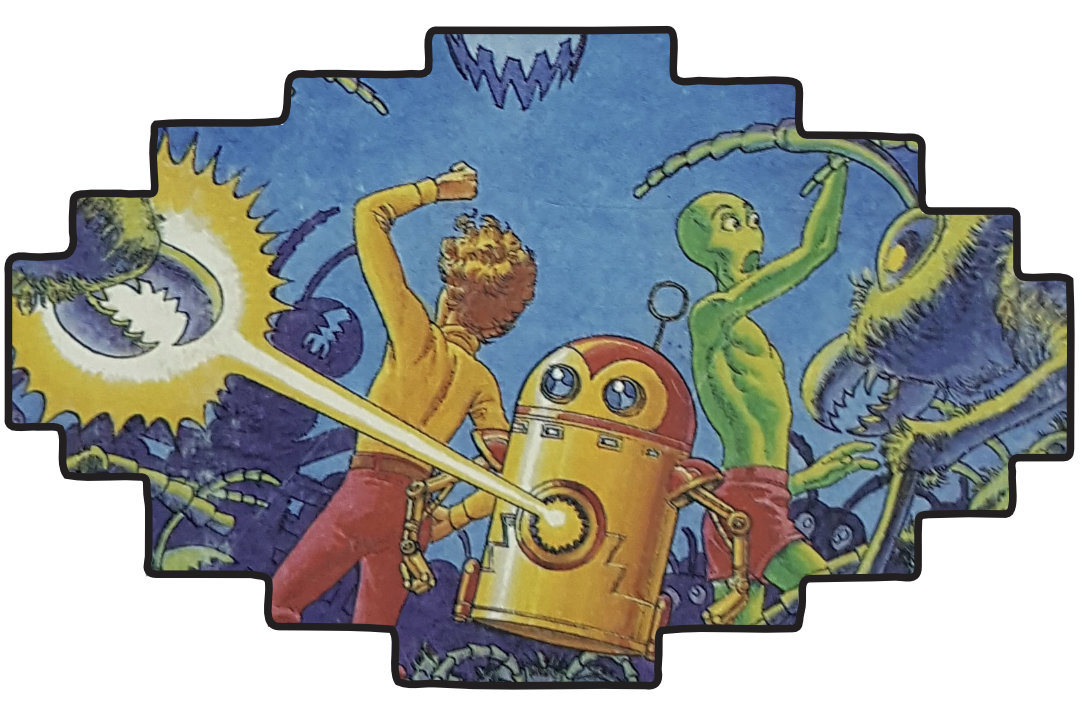
Image from Damien’s Gamebook Web Page, which rules, by the way.
Leave a Reply